
Yes, Canada is experiencing a significant teacher shortage in 2026, with schools across the country struggling to fill classrooms with fully certified educators. This shortage translates into real job opportunities for internationally trained teachers, but navigating provincial certification requirements remains the main hurdle between credentials earned abroad and employment in a Canadian K, 12 school.
The shortage has reached what education officials describe as a crisis point. While exact national vacancy figures for Canada are not published centrally, the pattern mirrors trends across North America: unfilled positions, increased reliance on teachers working outside their subject certification, and growing recruitment efforts targeting international candidates. For context, the United States alone reported more than 425,000 teaching positions in 2026 that were either vacant or staffed by under-certified teachers, marking the third consecutive year of increases.
For internationally trained teachers, this demand creates openings but not automatic pathways. Each Canadian province and territory sets its own certification standards, language requirements, and assessment processes. The strongest demand sits in rural and remote communities, specific subject areas like mathematics and French, and provinces with growing populations. Understanding where you can teach, what your credentials are worth, and how long certification will take determines whether the shortage becomes your opportunity.
This article answers whether the shortage is real, breaks down what has changed in 2026, identifies which provinces offer the clearest paths for international teachers, and explains what barriers you will face and how to prepare for them.
What Changed: Canada’s Teacher Shortage Reaches Crisis Point

Canada’s teacher shortage has reached a crisis point in Canada as of 2026, with school boards from coast to coast reporting difficulty filling K, 12 classrooms with qualified, certified educators. This is not a new problem, but the gap between available teaching positions and qualified teachers willing to fill them has widened sharply over the past three years. The shortage affects urban, suburban, and rural districts alike, though the severity varies by province, region, and subject area.
What makes 2026 particularly significant is the convergence of multiple pressures: rising student enrollment in several provinces, an aging teacher workforce nearing retirement, lingering effects from pandemic-era burnout and attrition, and ongoing struggles to attract new graduates into the profession. The result is classrooms left without permanent teachers, increased reliance on substitute staff and emergency hires, larger class sizes, and program cuts in some districts. For many school boards, the question is no longer whether they can find the perfect candidate, but whether they can find any qualified candidate at all. This shortage has real consequences for students, reduced access to specialized instruction, fewer extracurricular offerings, and inconsistent continuity in core subjects, making the need for new teachers more urgent than ever.
Key Developments: Three Critical Factors Driving the Shortage
1. Growing Demand Outpacing Teacher Supply
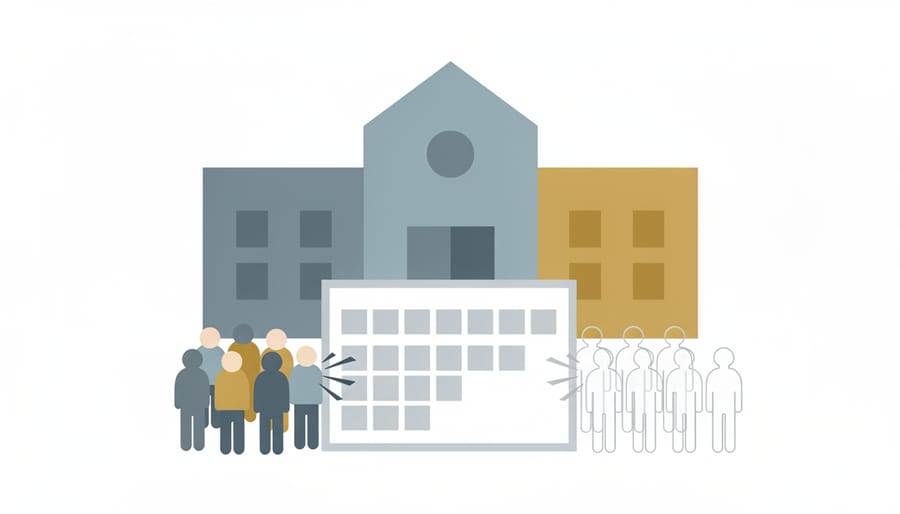
Canada’s teacher shortage stems from a fundamental mismatch: more classrooms need educators than the system can supply. Three overlapping pressures are widening this gap.
First, student enrollment continues to climb in many regions. Immigration drives population growth in urban centres, particularly in Ontario and British Columbia, filling schools faster than teacher training programs can graduate new educators. At the same time, expanding early learning programs and smaller class-size mandates in several provinces require more teachers per student than in previous decades.
Second, retirements are accelerating. Many teachers who entered the profession during the hiring boom of the 1990s are now leaving, creating thousands of vacancies each year. This exodus intensified during the pandemic, when some educators chose early retirement rather than navigate remote learning and health protocols. The pipeline of new teachers hasn’t kept pace with these departures.
Third, post-pandemic burnout persists. The sudden shift to online teaching in 2020, followed by years of hybrid models and evolving safety measures, left many educators exhausted. Administrative workload increased, mental health supports for students expanded teacher responsibilities, and public scrutiny of classroom decisions intensified. Some teachers left the profession entirely; others reduced their hours or moved to less demanding roles.
Together, these forces mean schools are competing for a shrinking pool of qualified candidates, particularly in high-need subject areas and underserved communities.
2. Geographic and Subject-Area Gaps Widening
The teacher shortage isn’t uniform across Canada, certain regions and subjects are experiencing far more severe staffing crises than others. Rural, remote, and Northern communities face the most acute challenges, often competing with urban centres for a limited pool of certified teachers. Meanwhile, specific subject areas struggle to attract qualified educators nationwide, regardless of location.
Geographic disparities hit hardest in areas outside major urban centres. Northern Ontario, rural British Columbia, Saskatchewan’s remote communities, and Canada’s three territories routinely report persistent vacancies that roll over from year to year. These regions offer fewer amenities, harsher climates, and greater professional isolation, factors that deter many teachers despite competitive salary premiums and northern allowances. Internationally trained teachers willing to relocate to underserved areas often find faster certification processing and more welcoming hiring conditions, though the adjustment can be significant.
Subject-area gaps compound the geographic challenges. The most critical shortages include:
- French immersion and French-language instruction, demand far exceeds the supply of qualified francophone teachers across all provinces
- STEM subjects (mathematics, physics, chemistry, computer science), schools struggle to compete with private-sector salaries for qualified specialists
- Special education, growing identification of learning needs outpaces the number of trained resource teachers and educational assistants
- Indigenous education and cultural programming, acute need for educators who can deliver culturally responsive curriculum, particularly in treaty areas
- Skilled trades and technology education, vocational programs lack instructors with current industry credentials
Ontario and British Columbia report particularly severe shortages in French immersion, while Alberta and Saskatchewan face critical gaps in rural STEM positions. Quebec’s English school boards struggle to staff positions outside Montreal and Quebec City. Atlantic provinces face broader shortages across multiple subjects due to smaller applicant pools and aging teacher demographics.
Internationally trained teachers with credentials in these high-demand areas hold a distinct advantage during certification and hiring processes, often securing employment offers before completing all provincial requirements.
3. Barriers for Internationally Trained Teachers Persist
Despite Canada’s urgent need for educators, internationally trained teachers encounter a complex web of certification barriers that can delay or derail their entry into the profession. While provinces actively recruit teachers, the regulatory framework has not kept pace with demand, creating a bottleneck that slows the pipeline of qualified international educators precisely when schools need them most.
The credential assessment process alone can take six to twelve months in many provinces, and that’s before additional requirements are factored in. Provincial teacher regulation bodies, such as the Ontario College of Teachers or the BC Teacher Regulation Branch, must evaluate foreign degrees, verify transcripts, and determine equivalency to Canadian standards. Each province sets its own criteria, so a teaching credential recognized in one province may require extra courses or exams in another. This fragmentation forces international teachers to navigate different systems depending on where they hope to work, adding time and cost to an already lengthy process.
Language proficiency requirements add another layer of complexity. Most provinces require proof of English or French fluency through standardized tests, typically IELTS, CELPIP, or TEF for French, with minimum scores that can be challenging to achieve, especially for teachers from non-native-English-speaking countries. Some provinces also mandate specific teacher education courses that may not have been part of an international degree, such as Indigenous education, Canadian history, or provincial curriculum methods. Completing these courses takes time and money, and finding programs that accept international credentials or offer flexible scheduling can be difficult, particularly for teachers already working or supporting families.
The result is a frustrating paradox: schools scramble to fill classrooms while qualified, experienced international teachers wait months or years for certification approval. Provincial regulations, designed to ensure teaching standards, inadvertently slow the very solution to the shortage. Until pathways are streamlined or equivalency processes accelerated, this barrier will continue to limit how quickly Canada can tap into the global teaching workforce.
Why It Matters for International Teachers

The teacher shortage puts internationally trained educators in a stronger position than they’ve been in decades. School boards that once received hundreds of applications for a single posting now actively recruit overseas, and many are willing to support your transition in ways that weren’t common even five years ago. This shift opens doors, but those doors still have locks, certification requirements haven’t disappeared, and understanding both the opportunities and the realities will help you plan effectively.
Here’s what the shortage means in practical terms for international teachers:
- More school boards are recruiting internationally and attending job fairs in countries like the UK, Australia, India, and the Philippines
- Some districts now offer signing bonuses, relocation assistance, or help with credential assessment costs to attract qualified candidates
- Provincial governments are piloting faster credential recognition processes and bridging programs to speed up certification timelines
- Demand is especially high in rural areas, northern communities, French immersion programs, and STEM subjects, where schools have struggled to fill positions for years
- Competitive teacher pay in Canada and strong benefits packages make the effort to certify financially worthwhile for most educators
The opportunity is real, but temper your expectations. You’ll still need to complete provincial certification, which typically involves credential assessment, language proficiency testing, and sometimes additional coursework or practicum hours. That process takes months, occasionally longer. Urban postings in Vancouver, Toronto, and Montreal remain competitive even during a shortage, so your first role may be in a smaller community or a harder-to-staff subject area. Budget for the transition period financially and emotionally; our cultural adjustment tips can help you prepare for life in a new education system and country.
The shortage won’t last forever, but right now it’s creating a window. If you’ve been considering teaching in Canada, this is the time to start your certification process and connect with school boards actively hiring internationally trained educators.
Province-by-Province Snapshot: Where the Demand Is Strongest
Teacher demand varies significantly across Canada’s provinces and territories, each with its own certification requirements and hiring conditions. Understanding these regional differences helps international educators identify where their qualifications and experience align with the greatest need.
Ontario faces persistent shortages in French immersion, special education, mathematics, and science, particularly outside the Greater Toronto Area. The Ontario College of Teachers oversees certification, requiring credential assessments, language proficiency testing, and often additional coursework. Rural and Northern communities actively recruit internationally trained teachers, sometimes offering relocation incentives and mentorship programs to ease the transition into Ontario’s K to 12 curriculum.
British Columbia reports strong demand in rural districts, Indigenous education, special education, and French immersion. The BC Teachers’ Council (part of the Teacher Regulation Branch) handles certification. Smaller communities frequently offer housing assistance and professional development support to attract international teachers willing to work outside Metro Vancouver or Victoria.
Alberta sees ongoing needs in rural areas, Northern communities, French immersion, and STEM subjects. The Alberta Teachers’ Association and provincial regulation bodies manage certification. Many school divisions run recruitment campaigns targeting internationally trained educators and provide bridging programs to help newcomers meet provincial standards.
Saskatchewan and Manitoba face acute shortages in rural and remote regions, particularly in Northern communities with significant Indigenous populations. Both provinces actively recruit international teachers and offer streamlined pathways for experienced educators. Saskatchewan’s Ministry of Education and Manitoba’s Teacher Certification Branch provide detailed guidance for foreign credential recognition.
Atlantic provinces (Nova Scotia, New Brunswick, Prince Edward Island, Newfoundland and Labrador) experience shortages in French immersion, special education, and rural postings. Each province has its own certification authority, but all welcome international applicants who meet standards. Some districts offer signing bonuses or loan forgiveness programs for hard-to-fill positions.
Quebec requires French language proficiency alongside teaching credentials, creating a distinct pathway through the Ministère de l’Éducation. Demand remains high in anglophone school boards, French immersion, and specialized subjects, though language requirements narrow the pool of eligible international teachers.
Check the specific teacher regulation website for your target province to confirm current certification requirements, timelines, and any international applicant supports.
What to Watch: Policy and Pathway Developments Ahead
The regulatory landscape for internationally trained teachers shifts frequently as provinces test new pathways and adjust certification requirements. Keep a close eye on official provincial teacher regulation websites, Ontario College of Teachers, the British Columbia Teachers’ Council, the Alberta Teachers’ Association, and equivalents in other jurisdictions, for announcements about streamlined credential assessments or pilot programs designed to fast-track qualified international educators. Several provinces have floated proposals to reduce the number of additional courses required for equivalency, and a few are exploring conditional licensing that allows teaching while completing certification requirements.
Federal immigration pathways also matter. Express Entry and Provincial Nominee Programs occasionally designate teachers as priority occupations, which can accelerate permanent residence applications. Monitor Immigration, Refugees and Citizenship Canada (IRCC) announcements and provincial immigration program updates, especially if you’re already in Canada on a work or study permit.
Some provinces are launching or expanding international recruitment missions, partnering with credential assessment services to pre-screen candidates abroad and offer provisional pathways before arrival. If your credentials come from a commonwealth country or a jurisdiction with a mutual recognition agreement, watch for bilateral initiatives that may simplify your route. How to become a teacher in Canada still requires meeting provincial standards, but flexibility and proactive monitoring can help you enter the profession faster as demand grows and systems adapt.
Frequently Asked Questions
The teacher shortage in Canada is uneven and evolving, so international teachers often have questions about where the opportunities are, what the certification process involves, and what realistic expectations look like. Here are answers to the most common queries.
Is the teacher shortage affecting every province in Canada?
No, the shortage is not uniform across Canada. High-demand areas include rural and remote communities, Northern regions, and specific subject areas like French immersion, STEM, and special education, but some urban centres in provinces like Ontario and British Columbia remain competitive. Check with the provincial teacher regulation body in your target region for current vacancy patterns.
How long does teacher certification for international educators typically take in Canada?
Certification timelines vary by province and individual circumstances, but most internationally trained teachers can expect six months to two years from application to full certification. Delays often come from credential assessments, language testing (if required), and additional coursework to meet provincial standards.
Do I need Canadian teaching experience to get hired?
No, you do not need Canadian experience to apply for teaching positions, but relevant international experience and a recognized teaching credential from your home country strengthen your application. Some school boards offer mentorship or bridging programs to help newcomers adapt to Canadian classroom practices.
Are there financial supports or incentives for internationally trained teachers?
Some provinces and school boards offer signing bonuses, relocation assistance, or tuition support for additional certification courses, particularly in high-need subject areas or remote communities. Check individual school board recruitment pages and provincial teacher association websites for current incentive programs.
Beyond these basics, remember that each province regulates teacher certification independently. What works in Ontario differs from Alberta or Quebec. Start by identifying your target province, then visit that province’s official teacher regulation website for detailed requirements, timelines, and any expedited pathways for experienced international educators. Patience and thorough preparation make the certification journey smoother and more successful.
Canada’s teacher shortage is real, growing, and creating genuine opportunities for international educators in 2026. Schools across the country need qualified teachers now, and that demand isn’t going away. However, the path to teaching in Canada requires more than just credentials from home, you’ll need to navigate provincial certification, demonstrate language proficiency, and often complete additional coursework or supervised practice. Start early, stay informed about your target province’s specific requirements, and prepare for a process that can take months or even years. The good news? Your skills are valued, and with persistence and the right guidance, you can build a rewarding career in Canadian K, 12 education.
If you’re an internationally trained teacher exploring certification pathways or looking for personalized advice on breaking into Canada’s teaching market, contact Study Canada. Our team understands the regulatory landscape and can help you map out a realistic plan that matches your qualifications, timeline, and career goals. Your next teaching role might be closer than you think, with the right preparation, you can turn Canada’s shortage into your opportunity.